概述
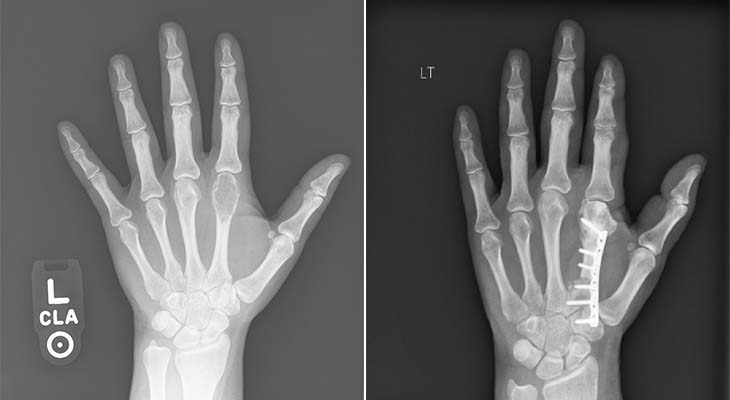
Giant cell tumor of bone (GCTB) is a rare, generally benign but locally aggressive tumor that usually develops at the ends of long bones, such as the femur, tibia, or radius. While most are non-cancerous, some may become malignant or recur.
症状
- Localized bone pain
- Swelling or a palpable lump
- Joint stiffness or limited range of motion
- Pathologic fractures (weakened bone breaks)
病因与风险因素
- Exact cause unknown
- Usually occurs in adults between ages 20–40
- Slightly more common in females
- Often arises after skeletal maturity
诊断方法
- X-ray showing a lytic lesion near joint
- MRI or CT to assess soft tissue extension
- Biopsy to confirm diagnosis
- Rarely, staging studies to check for metastasis (e.g., lungs)
治疗方案
- Curettage with bone grafting or cement (common initial treatment)
- Wide excision in recurrent/aggressive cases
- Denosumab (targeted therapy used pre-op or when surgery is not feasible)
- Radiation therapy (reserved for unresectable tumors)
预后情况
- Generally good if completely resected
- Local recurrence occurs in 10–30% of cases
- Rare cases (1–2%) may metastasize, typically to the lungs
与此类癌症共处
- Joint rehabilitation and physical therapy post-surgery
- Surveillance imaging for recurrence
- Support for emotional and functional recovery
预防与筛查
- No known prevention
- Early evaluation of persistent joint pain or bone lumps
FAQs
Q: Is giant cell tumor cancer?
A: It’s usually benign but can be aggressive. Rarely, it can become malignant.
Q: Does it come back?
A: Yes, recurrence is possible, especially if not fully removed.
Q: Can it spread?
A: Rarely. When it does, it typically spreads to the lungs.
相关资源
- Bone Cancer Research Trust
- National Cancer Institute
- ClinicalTrials.gov