
Wilms Tumor (Nephroblastoma)
Overview
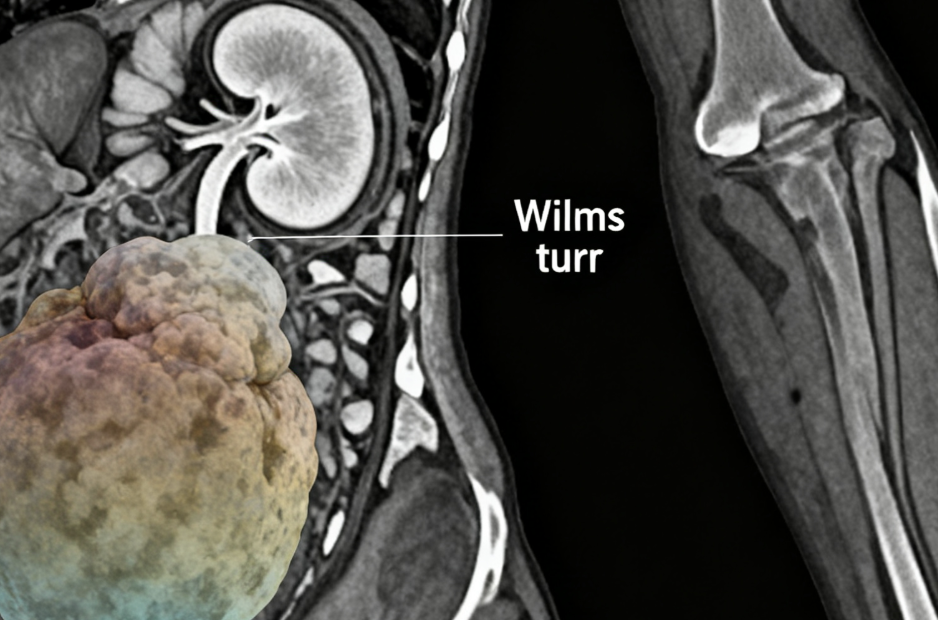
Wilms Tumor, also known as Nephroblastoma, is the most common kidney cancer in children, typically diagnosed between ages 2 and 5.
It arises from embryonic renal precursor cells (metanephric blastema) that fail to mature properly during kidney development.
Wilms Tumor is often unilateral, but in 5–10% of cases it affects both kidneys (bilateral or multifocal).
Genetic mutations involving WT1, WT2, or related chromosomal regions (11p13, 11p15) play a key role.
It is a highly treatable and curable pediatric cancer with modern multimodal therapy (surgery, chemotherapy, ± radiation).
Symptoms
- Abdominal swelling or a painless abdominal mass (most common sign)
- Abdominal pain or discomfort
- Blood in urine (hematuria)
- Fever, nausea, or loss of appetite
- High blood pressure (hypertension) due to renin secretion
- Fatigue, pallor (anemia-related)
- Occasionally discovered incidentally during imaging
Causes & Risk Factors
- Genetic mutations: WT1 or WT2 gene abnormalities on chromosome 11
- Sporadic cases (~90%) occur without family history
- Inherited syndromes increase risk:
- WAGR syndrome (Wilms tumor, Aniridia, Genitourinary anomalies, intellectual disability)
- Denys-Drash syndrome (renal failure, gonadal dysgenesis)
- Beckwith-Wiedemann syndrome (overgrowth, hemihypertrophy, macroglossia)
- Slightly more common in African ancestry and females
Diagnosis
- Physical exam: Palpable, firm, non-tender abdominal mass in a child
- Imaging:
- Ultrasound – initial evaluation
- CT/MRI abdomen and pelvis – defines tumor size, renal origin, and vascular invasion
- Chest CT – to assess for lung metastases
- Histopathology: Triphasic pattern (blastemal, epithelial, and stromal components)
- Genetic testing: WT1, WT2, and other relevant mutations for risk stratification
- Staging: Based on National Wilms Tumor Study (NWTS) / Children’s Oncology Group (COG) criteria
Treatment Options
- Surgery: Radical nephrectomy (or partial nephrectomy in bilateral cases) is the cornerstone
- Chemotherapy:
- Standard regimens (vincristine, dactinomycin, doxorubicin) given pre- or post-surgery
- More intensive therapy for anaplastic or metastatic disease
- Radiation therapy: For stage III–V disease or pulmonary metastases
- Targeted therapy / Clinical trials: Investigating WT1-directed or IGF2-targeted approaches
- Multidisciplinary management: Pediatric oncology, surgery, nephrology, and genetics
Prognosis
- Overall survival: >90% in localized disease with standard therapy
- Favorable histology: Excellent prognosis (5-year survival >95%)
- Anaplastic histology: Poorer outcomes, requires intensive therapy
- Bilateral or recurrent cases: Require organ-preserving approaches and prolonged follow-up
- Long-term monitoring: For recurrence, renal function, and late effects of chemo/radiation
Living with this Cancer Type
- Regular follow-up: Imaging and urine tests for recurrence
- Renal function monitoring: Especially after nephrectomy or chemotherapy
- Supportive care: Nutrition, growth monitoring, psychosocial support
- Fertility counseling: For older children and survivors
- Family education: Early recognition of relapse or hypertension
- Access to survivorship clinics for long-term care
Prevention & Screening
- No known prevention for sporadic cases
- Genetic counseling and surveillance for high-risk syndromes (WAGR, Beckwith-Wiedemann, Denys-Drash)
- Regular abdominal ultrasound every 3–4 months until age 7–8
- Early medical evaluation for abdominal swelling in children
FAQs
Q: Is Wilms Tumor cancerous?
A: Yes, it is a malignant tumor of the kidney, but usually highly curable with modern treatment.
Q: Can Wilms Tumor occur in both kidneys?
A: Yes, about 5–10% of cases are bilateral, requiring kidney-sparing treatment approaches.
Q: What are the long-term side effects of treatment?
A: Potential late effects include reduced kidney function, heart effects (from doxorubicin), and risk of secondary malignancies, though these are rare with careful follow-up.
Q: Can Wilms Tumor come back after treatment?
A: Recurrence is uncommon but possible; regular imaging surveillance helps early detection and retreatment.
Resources
- Children’s Oncology Group (COG) – childrensoncologygroup.org
- National Cancer Institute (NCI) – cancer.gov
- American Cancer Society (ACS) – cancer.org
- National Wilms Tumor Study Group (NWTSG) – nwtsg.org
- gov – Search “Wilms Tumor” or “Nephroblastoma”
Understand Precision Testing
Learn how liquid biopsy and chemo sensitivity testing can personalize your treatment plan.
Make Informed Decisions
Gain knowledge to actively participate in treatment discussions with your healthcare team.
Improve Treatment Outcomes
Discover how precision medicine and metabolic therapies can enhance treatment effectiveness.
Start Your Educational Journey Today
Empower yourself with knowledge about precision metabolic oncology and take an active role in your cancer care journey.
Need More Information?
Our team of oncology experts is here to help you understand your diagnosis and treatment options.