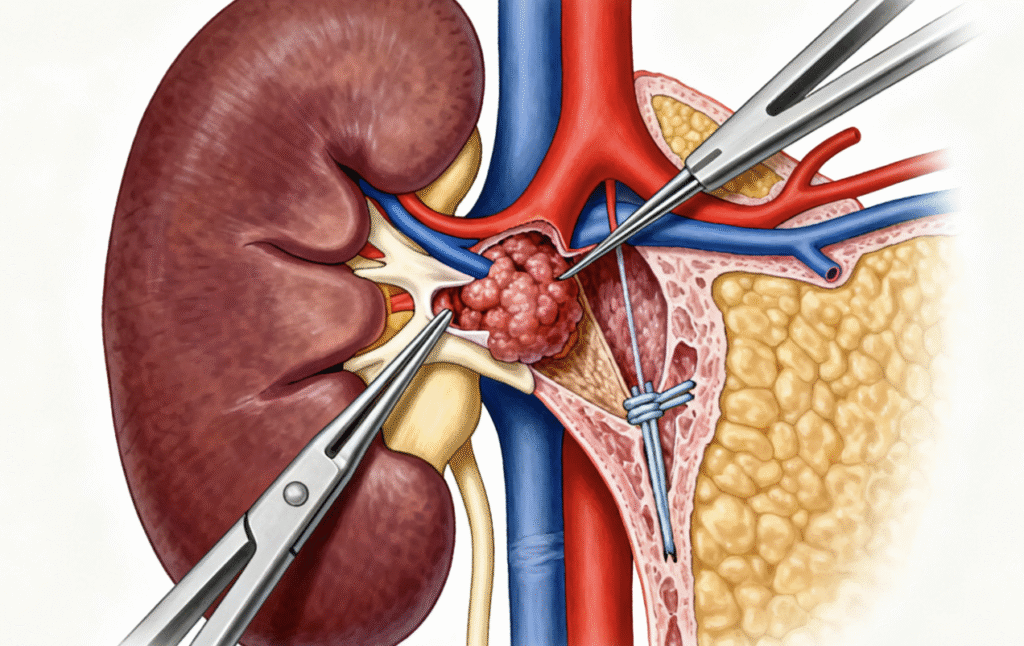
概述
Kidney cancer, also known as Renal Cell Carcinoma (RCC), is the most common type of kidney cancer in adults, accounting for about 90% of all malignant renal tumors.
It originates from the renal tubular epithelial cells within the nephron.
The main subtypes include:
- Clear Cell RCC (~75–80%)
- Papillary RCC (~10–15%)
- Chromophobe RCC (~5%)
- Collecting duct carcinoma and Medullary carcinoma (rare, aggressive variants)
Kidney cancer typically occurs between ages 50–70 years and is more common in men.
Early-stage disease often causes few or no symptoms and is sometimes discovered incidentally on imaging.
症状
- Hematuria (blood in urine) – most common presenting sign
- Flank or side pain
- Palpable mass in the abdomen or flank
- Unexplained weight loss or fatigue
- Fever or night sweats (paraneoplastic)
- High blood pressure (hypertension)
- Anemia or polycythemia (due to altered erythropoietin production)
- Bone pain or cough in metastatic cases
(Note: The “classic triad” of hematuria, flank pain, and palpable mass occurs in <10% of modern cases.)
病因与风险因素
- Smoking – major preventable risk factor
- Obesity and high blood pressure
- Chronic kidney disease or dialysis history
- Genetic syndromes:
- Von Hippel–Lindau (VHL) disease – associated with clear cell RCC
- Hereditary papillary RCC (MET gene mutations)
- Birt–Hogg–Dubé syndrome – linked to chromophobe RCC
- Tuberous sclerosis (rare association)
- Occupational exposure – to cadmium, trichloroethylene, or petroleum products
- Male sex and older age
诊断方法
- Imaging:
- Ultrasound – initial screening tool for renal mass
- CT or MRI of abdomen and pelvis – defines size, location, and venous invasion
- Chest CT – checks for lung metastases
- Bone scan / PET-CT – if symptoms suggest metastasis
- Laboratory tests: CBC, renal and liver function, calcium, erythropoietin levels
- Histopathology: Confirms subtype and grade via biopsy or surgical specimen
- Staging: Based on TNM system (Tumor, Node, Metastasis)
治疗方案
- Localized disease (Stage I–II):
- Partial nephrectomy (nephron-sparing surgery) for small tumors (<4 cm)
- Radical nephrectomy (removal of kidney ± adrenal gland) for larger or central tumors
- Locally advanced or metastatic disease (Stage III–IV):
- Targeted therapy:
- VEGF inhibitors (sunitinib, pazopanib, axitinib)
- mTOR inhibitors (everolimus, temsirolimus)
- Immunotherapy:
- Immune checkpoint inhibitors (nivolumab, pembrolizumab, ipilimumab)
- Combination regimens: Immunotherapy + targeted therapy (current standard of care)
- Ablation or embolization: For patients unfit for surgery
- Radiation therapy: For palliation of metastases (e.g., bone, brain)
- Targeted therapy:
- Clinical trials: Ongoing research in novel immunotherapy and personalized medicine (e.g., HIF-2α inhibitors).
预后情况
- Localized RCC: 5-year survival rate ≈ 90–95% after surgery
- Locally advanced (stage III): 5-year survival ≈ 60–70%
- Metastatic (stage IV): Median survival ≈ 18–24 months with modern therapies
- Prognostic factors: Stage, histologic subtype, performance status, and molecular features (e.g., VHL status)
- Regular surveillance: Imaging every 6–12 months post-treatment for recurrence detection
与此类癌症共处
- Long-term monitoring: Periodic imaging, blood work, and kidney function tests
- Lifestyle adjustments: Quit smoking, maintain healthy weight, control blood pressure
- Nutrition and hydration: To preserve remaining kidney function
- Psychosocial support: Coping with anxiety, fatigue, and treatment side effects
- Rehabilitation and survivorship programs: For recovery and quality of life
- Fertility and sexual health counseling: If receiving targeted or immunotherapy
预防与筛查
- Avoid smoking and reduce exposure to industrial carcinogens
- Maintain healthy weight and blood pressure
- Regular check-ups for individuals with family history or genetic syndromes
- Genetic counseling and testing for VHL, Birt–Hogg–Dubé, or hereditary papillary RCC
- Imaging surveillance for high-risk patients (e.g., VHL carriers)
FAQs
Q: Is kidney cancer always fatal?
A: No. When detected early, kidney cancer is often curable with surgery. Advanced cases can be controlled for years with modern targeted and immunotherapies.
Q: Can kidney cancer spread to other organs?
A: Yes. Common metastatic sites include the lungs, bones, liver, and brain.
Q: Is it hereditary?
A: Most cases are sporadic, but around 2–4% are hereditary.
Q: Can a person live with one kidney?
A: Yes. Most people live normal, healthy lives after removal of one kidney, provided the other is functioning well.
相关资源
- American Cancer Society (ACS) – cancer.org
- National Cancer Institute (NCI) – cancer.gov
- Kidney Cancer Association (KCA) – kidneycancer.org
- European Association of Urology (EAU) – uroweb.org
- gov – Search “Renal Cell Carcinoma” or “Kidney Cancer”