

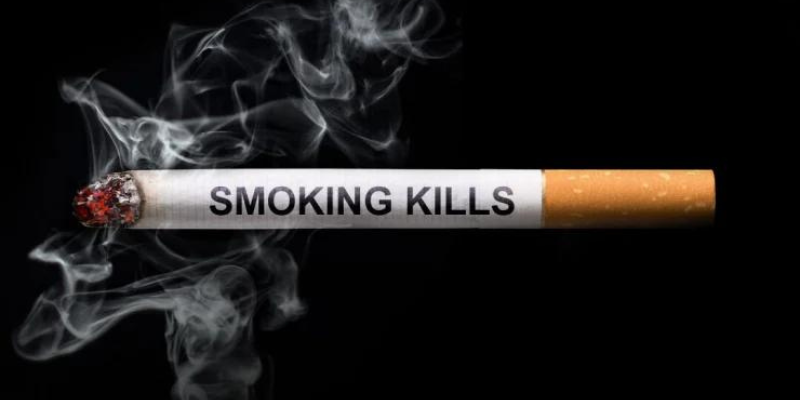
Smoking is one of the leading causes of lung cancer worldwide. In fact, tobacco use is responsible for a large proportion of cancer deaths globally, making it one of the most preventable risk factors.
But how exactly does smoking turn healthy lungs into cancer?
Each time you inhale cigarette smoke, your lungs are exposed to a toxic mix of chemicals.
These harmful substances don’t just stay in the lungs — they interact with your cells at a molecular level.
The main way smoking causes lung cancer is by damaging DNA.
Even a single cigarette can start this process, but repeated exposure makes the damage accumulate over time.
👉 In simple terms:
Smoking rewrites the “instructions” inside your cells.
Your body can repair some damage — but not all.
With long-term smoking:
Eventually, this leads to permanent genetic changes, which are the foundation of cancer.
Smoking doesn’t just damage cells — it creates a harmful environment.
This constant irritation acts like fuel for tumor development.
Your immune system normally helps detect and destroy abnormal cells.
But smoking:
Result:
Cancer cells are more likely to survive and multiply.
The effectiveness of cancer treatment varies among each patient.
Lung cancer doesn’t develop overnight.
The damage is cumulative — your lungs “remember” every exposure.
Even if you don’t smoke:
Not all smokers develop lung cancer — but that doesn’t mean it’s safe.
Possible reasons:
However, the risk remains significantly higher for all smokers.
Yes — and it’s never too late.
Smoking causes lung cancer through a combination of:
These processes build up silently over time — often without symptoms until it’s advanced.
The most important takeaway:
👉 Lung cancer caused by smoking is largely preventable.
🚭 If you smoke — consider stopping today
🚭 If you don’t — don’t start
Your lungs are built to breathe — not burn.
World Health Organization. (2024).
Cancer. Retrieved from https://www.who.int/news-room/fact-sheets/detail/cancer
U.S. Centers for Disease Control and Prevention. (2023).
Smoking & tobacco use: Health effects. Retrieved from https://www.cdc.gov/tobacco/basic_information/health_effects/index.htm
Cancer Research UK. (2023).
How smoking causes cancer. Retrieved from https://www.cancerresearchuk.org/about-cancer/causes-of-cancer/smoking-and-cancer/how-does-smoking-cause-cancer
Memorial Sloan Kettering Cancer Center. (2022).
How do cigarettes cause cancer? Retrieved from https://www.mskcc.org/news/how-do-cigarettes-cause-cancer
Alberg, A. J., Brock, M. V., & Samet, J. M. (2013).
Epidemiology of lung cancer: Looking to the future. Journal of Clinical Oncology, 31(8), 992–1001. https://doi.org/10.1200/JCO.2012.45.5380
Hecht, S. S. (2012).
Tobacco smoke carcinogens and lung cancer. Journal of the National Cancer Institute, 104(8), 585–587. https://doi.org/10.1093/jnci/djs216
National Cancer Institute. (2023).
Cigarette smoking and cancer. Retrieved from https://www.cancer.gov/about-cancer/causes-prevention/risk/tobacco
Alberg, A. J., Shopland, D. R., & Cummings, K. M. (2014).
The 2014 Surgeon General’s report: Commemorating the 50th anniversary of the 1964 report of the Advisory Committee to the U.S. Surgeon General and updating the evidence on the health consequences of cigarette smoking. American Journal of Epidemiology, 179(4), 403–412. https://doi.org/10.1093/aje/kwt335
Precision medicine provides patients with clearer and more personalized treatment guidelines


Learn how precision medicine can help with your cancer treatment

The effectiveness of cancer treatment varies among each patient.