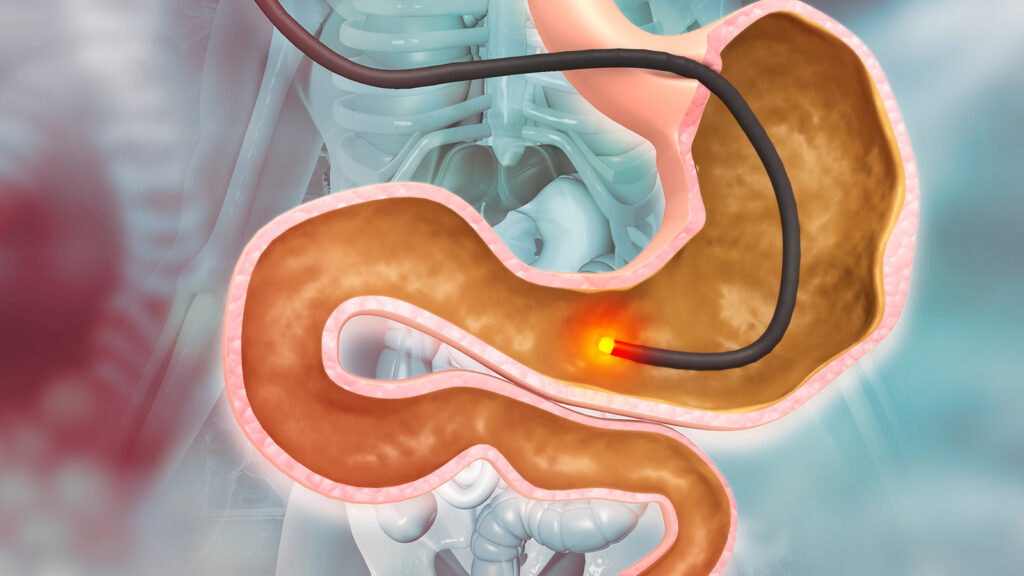
内窥镜检查

What Is an Endoscopy?

Endoscopy is a medical procedure that uses a thin, flexible tube with a light and camera (called an endoscope) to look inside the body. It allows doctors to directly view internal organs and tissues, and often take biopsies at the same time.

Unlike imaging tests (X-ray, CT, MRI, PET, Ultrasound), which show pictures from outside the body, endoscopy provides direct visualization and often tissue sampling in one procedure.


How Endoscopy Is Used in Cancer

  1. Detection & Diagnosis
  • Detects tumors, polyps, or abnormal areas in hollow organs.
  • Enables biopsy of suspicious tissues.
  1. Screening
  • Colonoscopy (a type of endoscopy) is the gold standard for colon cancer screening.
  • Upper endoscopy is often used to check for esophageal, stomach, and duodenal cancers.
  1. Staging
  • Assesses how far a tumor has spread within the wall of an organ.
  • Endoscopic ultrasound (EUS) can show depth of invasion and nearby lymph nodes.
  1. Treatment & Monitoring
  • Removes precancerous polyps (e.g., during colonoscopy).
  • Monitors high-risk patients or recurrence after treatment.


Types of Endoscopy Commonly Used in Cancer

  • Colonoscopy: Examines the colon and rectum.
  • Gastroscopy (Upper Endoscopy): Examines esophagus, stomach, and duodenum.
  • Bronchoscopy: Examines airways and lungs.
  • Cystoscopy: Examines the bladder.
  • Endoscopic Ultrasound (EUS): Combines endoscopy with ultrasound for deeper views.


What to Expect During the Procedure

  • Typically done as an outpatient procedure.
  • You may be given sedation or anesthesia for comfort.
  • The endoscope is inserted through the mouth, nose, or rectum depending on the organ being examined.
  • A biopsy can often be taken during the same session.
  • Most procedures last 15–60 minutes.


Benefits

  • Direct visualization of internal organs.
  • Can combine diagnosis and treatment (e.g., polyp removal).
  • High accuracy for detecting early cancers and precancerous changes.
  • Minimally invasive compared to surgery.


Risks & Limitations

  • Discomfort: bloating, sore throat, or cramping.
  • Bleeding or perforation (rare but possible, especially if biopsy/polyp removal is done).
  • Requires sedation, meaning patients need recovery time and someone to drive them home.
  • Limited to hollow organs — not useful for solid organs (e.g., brain, liver).


Alternatives & Related Tests

  • Imaging (CT, MRI, PET, Ultrasound): Shows structure but not direct view.
  • Capsule Endoscopy: Swallowed camera pill for small intestine (limited availability).
  • Biopsy: Can be performed during endoscopy for confirmation.


Questions to Ask Your Doctor

  • Why do I need an endoscopy?
  • What type of endoscopy will be performed?
  • Will I need sedation or anesthesia?
  • What are the risks of biopsy or polyp removal?
  • How often will I need this test for follow-up?


Patient Tips

  • Fasting: No food or drink for several hours before the procedure.
  • Bowel prep: For colonoscopy, a laxative prep is needed to clear the intestines.
  • Arrange for transportation after sedation.
  • Ask how long you will need to rest before resuming normal activities.


References


了解精准检测

了解液体活检和化疗敏感性检测如何为您的护理方案提供个性化参考。

做出更明智的决策

获取相关知识,更积极地参与与医疗团队之间的护理讨论。

改善护理效果

了解精准医疗与代谢相关护理方式如何提升整体护理策略的参考价值。

今天就开始您的学习之旅

通过了解精准代谢肿瘤学相关知识,让自己更有力量,并在癌症护理过程中发挥更主动的参与作用。

需要更多信息?

我们的肿瘤相关专家团队可协助您理解诊断结果与护理方向选择。