
Stop Guessing. Start Targeting
Because your cancer is as unique as your DNA, your treatment should be too.
Precision insights that complement standard oncology care to guide next-step planning and ongoing monitoring.
Why Liquid Biopsy Testing
May Be Worth Considering
A personalised cancer plan may help guide more informed treatment choices by identifying drug-response insights before major treatment costs are incurred.
| Cost comparison | Estimated cost |
|---|---|
| Liquid biopsy (CTC test) | US$1,000–US$3,000 |
| One ineffective chemotherapy cycle | US$8,000–US$50,000+ |
| 6-month chemotherapy course | US$27,000–US$150,000+ |
1. Cost figures shown are illustrative ranges and may vary by country, treatment regimen, provider, and individual case.
2. Liquid biopsy may provide additional guidance for treatment decision-making, but does not guarantee outcomes or replace clinical judgment.
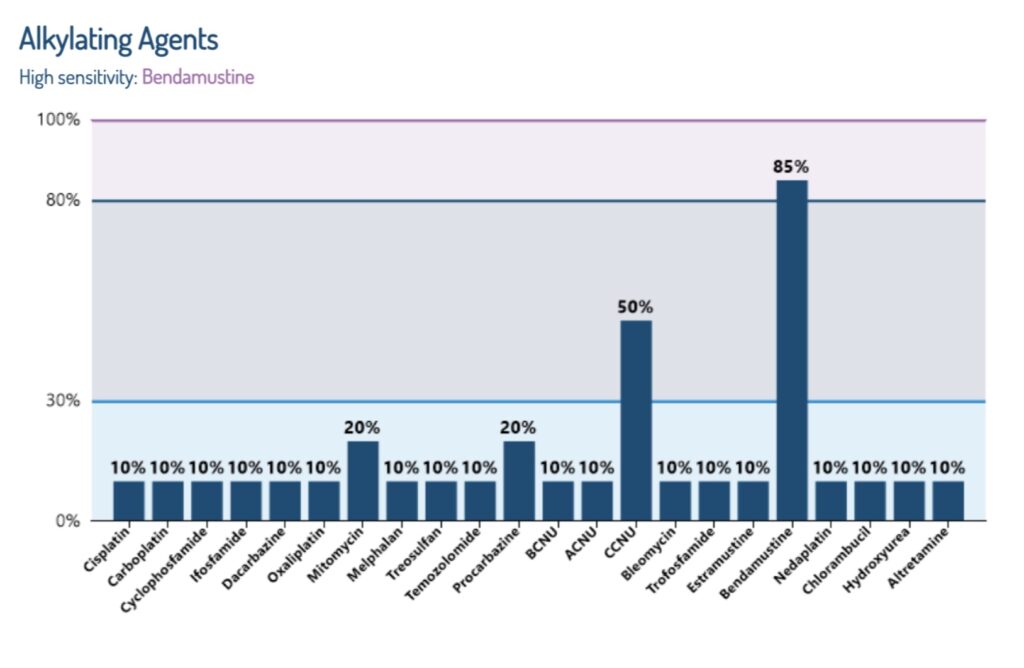
Example of a drug sensitivity report
This image shows an example of a laboratory drug sensitivity analysis, which evaluates how cancer cells may respond to different anticancer treatments.
The findings may help doctors identify therapies that could be more effective and avoid treatments that are less likely to work, together with other clinical information.
Understanding Your Precision Report
A precision report adds biological insight to standard clinical findings. It helps your doctor interpret risk, identify relevant options, and monitor changes over time — to support treatment decision-making.
What the report helps clarify
Structured insights can support your oncology team to plan with more confidence.
- ✓Actionable signals: findings that may support treatment selection or sequencing.
- ✓Monitoring clues: supports tracking response and detecting change earlier.
- ✓Risk context: helps interpret what “stable” or “progressing” may mean biologically.
How it complements standard care
| Area | Standard | With precision support |
|---|---|---|
| Decision basis | Clinical + imaging | Clinical + imaging + biological signals |
| Monitoring | Periodic scans | Scans + additional biological tracking |
| Adjustment | Often after visible change | May support earlier, informed adjustment |
| Goal | Follow evidence-based standards | Personalise choices using individual biology |
How it fits into your care journey
Speak to our team to learn what your report may indicate and how it can support treatment planning.
- Patients lived up to twice as long on average
- The cancer stayed under control for a longer period (up to 1.7x longer)
- Some patients with advanced cancer lived more than a year.
- About 4 out of 10 patients experienced their cancer shrinking or stopping from growing for a period of time
Supporting clearer,
more informed
treatment decisions
- It gives your doctor extra biological information about your cancer.
- It helps narrow down which treatments are likely to work — and which probably won’t.
- It supports clearer conversations between you, your family and your oncologist.
- Integrates standard medical care with biological information
- Supports more personalised, condition-appropriate decisions
- Helps clarify options for discussion with your oncology team
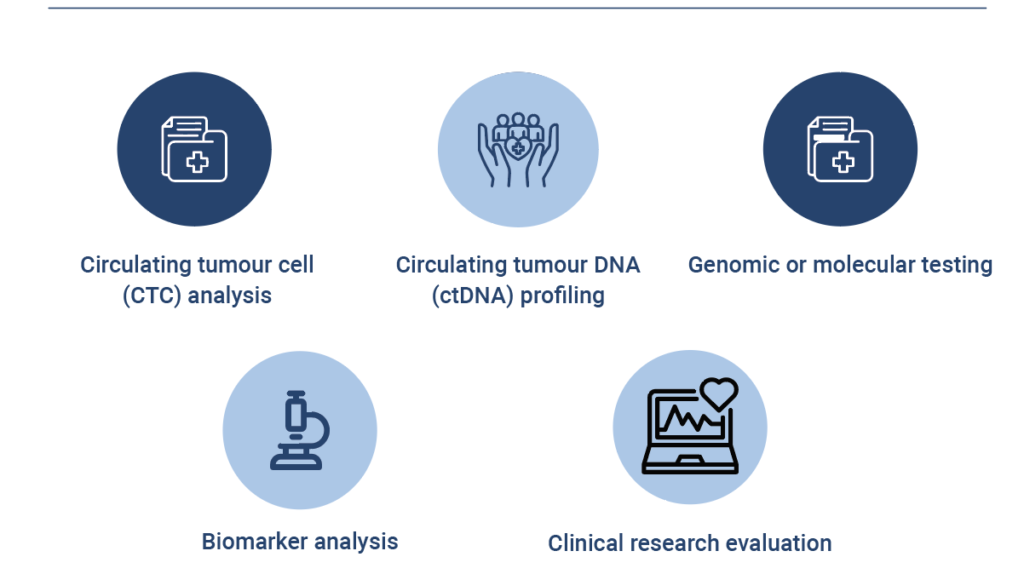
Circulating tumour cell
(CTC) analysis
Circulating tumour DNA
(ctDNA) profiling
Genomic or molecular testing
Biomarker analysis
Clinical research evaluation
Treatment Choice Can
Significantly Impact Survival
Key findings from a clinical study:


In patients with advanced cancer, about 4 out of 10 people who used a personalised cancer plan experienced their cancer shrinking or remaining stable for a period of time.
Treatment Choice Can Significantly Impact Survival
In late-stage cancer cases, targeted precision approaches have shown substantial improvement in overall survival.
Source: Precision oncology matched-therapy studies including the MD Anderson IMPACT program (Tsimberidou et al., 2017).
Genetic testing of tumors may help doctors choose more personalized treatments.
Up to 30% more lung cancer cases may be detected earlier when molecular testing is used.
Source: Selected lung cancer precision medicine studies demonstrating improved diagnosis and survival outcomes with molecular profiling (Rosell et al., 2013; Lindeman et al., 2018).
Impact of Precision Oncology
Supporting clearer, more informed treatment decisions
Cancer treatment involves many important decisions guided by clinical evaluation, imaging, pathology, and established medical guidelines.
Advances in precision medicine allow doctors to understand cancer at a biological level, adding insight that may support treatment planning and monitoring.
Schedule a free 15-minute consultation with our cancer care professionals.
What is your benefit?
To support improved treatment outcomes by helping identify treatments that may be more effective for your specific cancer — while helping minimise unnecessary side effects from less effective treatments.

Contact Us
Contact Us for the updated information on Precision Medicine
+852 4750 3485
Email Us
info@mycancerinfo.org