

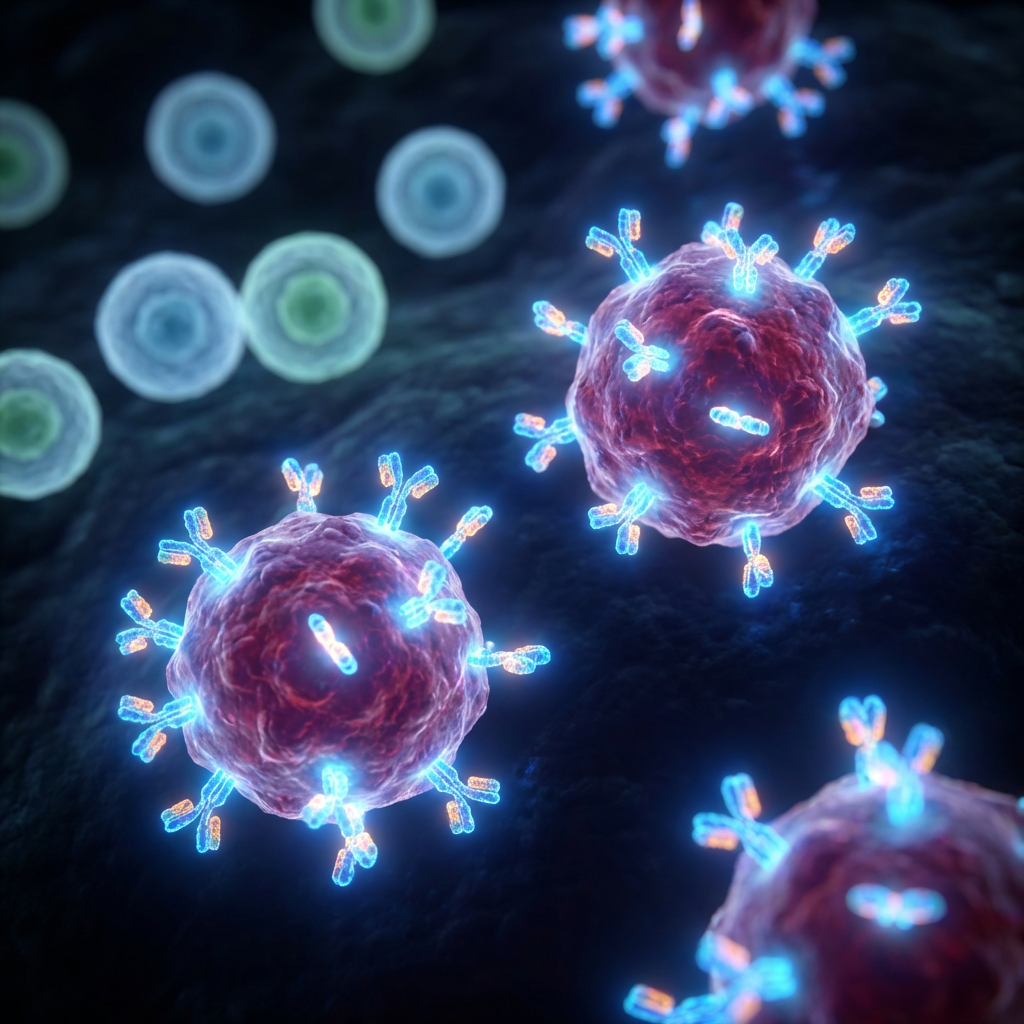
NK cells are immune cells that help the body respond to danger without needing prior exposure to a specific target. Unlike some other immune cells that require more specialized activation, NK cells are part of the body’s earlier immune response and can act quickly against abnormal cells. NCI describes them as immune cells capable of killing tumor cells, while broader immunology sources describe immune surveillance as one of the ways the body detects and destroys cells that may become cancerous.
In simple terms, an NK cell is one of the body’s natural “patrol cells.” Its job is to look for cells that no longer seem normal and respond if something appears wrong. That is why NK cells are often discussed in cancer research and immunotherapy.
A cancer cell is a cell that has developed changes allowing it to grow out of control, survive when it should not, and sometimes spread to other parts of the body. The immune system can sometimes recognize these cells as abnormal, but cancer cells may also develop ways to hide or resist immune attack. Cancer can grow when it evades or suppresses the immune system’s natural defenses.
This creates an ongoing biological struggle: the immune system tries to recognize and eliminate abnormal cells, while cancer cells may evolve ways to survive, escape detection, and continue growing.
NK cells do not recognize cancer cells in exactly the same way as highly specialized immune cells like T cells. Instead, they respond to patterns that suggest a cell is abnormal or under stress. When the signals on a cell look wrong, the NK cell may become activated and attack. NCI trial and drug descriptions on NK-cell therapies repeatedly describe NK cells as important immune cells that can recognize and bind to tumor cells, leading to tumor-cell killing.
A simple way to think about it is this: a healthy cell usually shows the immune system signs that it belongs. A cancer cell may lose some of those normal signals or display stress-related changes. NK cells are designed to notice that mismatch and respond. This is part of the reason they are considered important in the body’s natural anti-tumor defense.
Once activated, NK cells can kill cancer cells by releasing toxic substances that damage the target cell. NCI describes NK cells as containing granules with enzymes that can kill tumor cells. NCI drug and trial pages specifically describe activated NK cells releasing perforins, granzymes, and cytokines, resulting in tumor-cell lysis.
In practical terms, the NK cell forms contact with the abnormal cell and delivers these cell-killing molecules. That attack can trigger the cancer cell to die. This is one reason NK cells are being studied so actively in cancer immunotherapy research.
Although NK cells can kill tumor cells, they do not always succeed in stopping cancer completely. Cancer cells can develop ways to evade immune surveillance, and the tumor microenvironment can become suppressive to anti-tumor immune cells. Research sources from NCI and NIH-linked reviews describe immune evasion, impaired immune-cell trafficking, and tumor-driven suppression as important reasons cancers can continue growing despite immune defenses.
This means the battle between NK cells and cancer cells is not one-sided. NK cells may be capable of recognizing and attacking abnormal cells, but cancer can adapt. That is why the presence of immune cells alone does not guarantee that a tumor will be controlled.
The effectiveness of cancer treatment varies among each patient.
NK cells are important in cancer research because they offer a natural model for how the body can fight cancer on its own. NCI’s current clinical trial listings include multiple studies of NK-cell-based therapies, including engineered NK cells, cytokine-induced memory-like NK cells, and NK-cell combinations for advanced cancers. These trials reflect growing interest in making NK cells more effective against tumors.
The larger idea is not simply that NK cells exist, but that understanding how they interact with cancer cells may help researchers develop better ways to support the immune system in cancer care. That does not mean NK-cell therapy is standard for every patient. It means this is an active area of investigation.
The key point is that NK cells are part of the body’s natural defense system, and they can recognize and kill some cancer cells. But cancer is biologically complex, and cancer cells can sometimes hide from, suppress, or outmaneuver the immune response. That is why understanding the interaction between immune cells and cancer cells is such an important part of modern oncology.
For patients and families, this topic is most useful as a way to understand why the immune system matters in cancer — and why cancer immunotherapy continues to be such an important field of research. Decisions about diagnosis and treatment should still be guided by qualified medical professionals and evidence-based care.
The interaction between an NK cell and a cancer cell is one of the clearest examples of how the immune system tries to protect the body from disease. NK cells can identify abnormal cells and release molecules that help destroy them, but cancer cells can also develop ways to escape that attack. Understanding that biological struggle helps explain both the promise and the limits of immune-based cancer care.
At Cancer A-Z, you can request a 15 mins free-of-charge discussion with our cancer professionals.
National Cancer Institute. Definition of natural killer cell.
https://www.cancer.gov/publications/dictionaries/cancer-terms/def/natural-killer-cell
National Cancer Institute. Definition of NK cell.
https://www.cancer.gov/publications/dictionaries/cancer-terms/def/nk-cell
American Cancer Society. What Is Immunotherapy?
https://www.cancer.org/cancer/managing-cancer/treatment-types/immunotherapy.html
National Cancer Institute. TROP2-CAR-NK for the Treatment of Patients with Advanced Solid Tumors.
https://www.cancer.gov/research/participate/clinical-trials-search/v?id=NCI-2023-08351
National Cancer Institute. Cytokine-Induced Memory-Like Natural Killer Cell Therapy with Interleukin-2 after Hematopoietic Stem Cell Transplantation for the Treatment of Patients with AML or MDS.
https://www.cancer.gov/research/participate/clinical-trials-search/v?id=NCI-2024-00762
National Cancer Institute. Memory-Like Natural Killer Cell Therapy with Interleukin-2, Nivolumab, and Relatlimab for Advanced or Metastatic Melanoma.
https://www.cancer.gov/research/participate/clinical-trials-search/v?id=NCI-2024-04954
National Cancer Institute. Allogeneic CD3- CD19- Selected Natural Killer Cells.
https://www.cancer.gov/publications/dictionaries/cancer-drug/def/allogeneic-cd3–cd19–selected-natural-killer-cells
American Association of Immunologists. How the Immune System Fights Cancer.
https://immunologyexplained.aai.org/topics/cancer/how-the-immune-system-fights-cancer/
Precision medicine provides patients with clearer and more personalized treatment guidelines


Learn how precision medicine can help with your cancer treatment

The effectiveness of cancer treatment varies among each patient.