

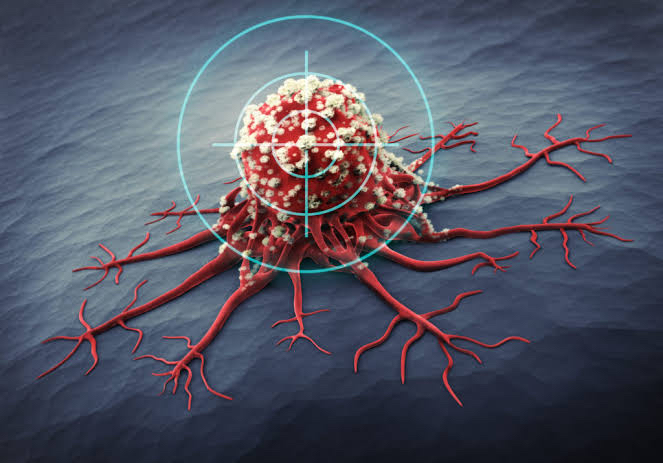
Targeted therapy uses drugs or other substances to block or interfere with molecules that cancer cells rely on. These targets may include abnormal proteins, mutated genes, or signaling pathways that tell cancer cells to keep growing. Rather than broadly attacking all rapidly dividing cells, targeted therapy is meant to focus on a particular vulnerability in the tumor.
A simple way to think about it is this: if cancer cells are being driven by a specific “switch,” targeted therapy aims to turn that switch off. In some cases, the treatment blocks growth signals. In others, it cuts off the tumor’s blood supply, triggers cancer cell death, or helps the immune system recognize the cancer more effectively.
Targeted therapy works by interfering with the biological processes cancer cells depend on. According to NCI, these treatments can block or turn off chemical signals that tell cancer cells to grow, prevent tumors from making new blood vessels, help kill cancer cells, or deliver cell-killing substances directly to cancer cells. The exact mechanism depends on the drug and the target involved.
Some targeted therapies work outside the cancer cell by attaching to a marker on its surface. Others work inside the cell by blocking internal signals that control survival or division. The American Cancer Society explains that this is why targeted therapies are often divided into monoclonal antibodies and small-molecule drugs. Monoclonal antibodies are larger and usually act on targets found on the outside of cells, while small-molecule drugs are small enough to enter cells and affect targets inside them.
The biggest difference is specificity. Chemotherapy generally attacks cells that divide quickly, which includes cancer cells but also some healthy cells such as those in the hair follicles, digestive tract, and bone marrow. Targeted therapy is designed to act more selectively on cancer-related changes, which may spare more normal tissue. The American Cancer Society notes that targeted therapy acts on specific cancer cells, while traditional chemotherapy is cytotoxic to many cells, including healthy ones.
That does not mean targeted therapy has no side effects. It still can, and sometimes the side effects can be serious. But the pattern of side effects is often different because the treatment is aimed at a more specific pathway or protein.
Not every patient is a candidate for targeted therapy. These treatments are usually most useful when a tumor has a biomarker or molecular feature that the drug is designed to target. That is why doctors often recommend biomarker testing, also called tumor profiling or molecular testing, before choosing treatment. NCI explains that biomarker testing finds changes in your cancer that could help your doctor choose a treatment.
This is a key part of precision medicine. Two patients may both have lung cancer, breast cancer, or colorectal cancer, but only one may have a targetable mutation or protein that makes targeted therapy a good option. In that sense, the question is not just what type of cancer a person has, but what is driving that cancer at the molecular level.
In some situations, doctors may use a liquid biopsy to help guide targeted therapy. These tests use a blood sample to look for tumor DNA shed into the bloodstream. NCI has reported that FDA-approved liquid biopsy tests can identify genetic changes in tumor DNA from blood and help doctors choose a targeted therapy or immunotherapy that is more likely to work.
Liquid biopsy is especially useful because cancer can change over time. NCI has also noted that tumor markers used to decide whether someone is a candidate for targeted therapy can sometimes be measured through liquid biopsy, and that blood-based testing may help doctors track resistance or monitor how treatment is working. However, liquid biopsy does not replace every tissue biopsy, and its usefulness depends on the cancer type and clinical setting.
The effectiveness of cancer treatment varies among each patient.
The main benefit of targeted therapy is that it can make treatment more precise. When a tumor has the right target, these drugs may slow growth, shrink the cancer, or control it for long periods. In some cases, they can be used alone. In others, they are combined with chemotherapy, radiation, surgery, hormone therapy, or immunotherapy.
Another important benefit is that targeted therapy can help avoid a trial-and-error approach. Instead of starting treatment without knowing whether a drug fits the biology of the tumor, doctors can use biomarker testing to make a more informed choice.
Targeted therapy is not a cure-all. One limitation is that not all cancers have an actionable target. Another is that cancers can become resistant over time, meaning a therapy that worked at first may stop working if the tumor changes or activates another pathway. NCI lists drug resistance as one of the drawbacks of targeted therapy.
There is also the practical reality that targeted therapy is different for different cancers. A drug that works for one tumor type may not work for another, even if the names of the cancers sound similar. This is why careful testing, monitoring, and ongoing review of the treatment plan are so important. NCI maintains a drug list by cancer type because approved targeted therapies are specific to certain cancers and patient groups.
Because targeted therapies work in different ways, side effects vary from drug to drug. Common examples can include skin problems, diarrhea, liver issues, high blood pressure, fatigue, and mouth sores, depending on the treatment being used. The side effects are often related to where the target is found in the body and how the drug works.
This is important for patients to understand. “Targeted” does not mean “mild” or “risk-free.” It means the treatment is directed at a specific cancer-related feature. Patients still need regular monitoring, blood tests, and communication with their care team during treatment.
Targeted therapy has changed cancer care by making it possible to treat some cancers based on their biology rather than their location alone. It is one of the strongest examples of how precision medicine is shaping oncology. But its success depends on knowing whether the tumor has the right target, choosing the right drug, and monitoring closely for resistance or change over time.
For patients, the key question is no longer just “What treatment is available?” It is “What treatment best matches the biology of this cancer?” That shift is what makes targeted therapy such an important part of modern cancer treatment.
At Cancer A-Z, you can request a 15 mins free-of-charge discussion with our cancer professionals.
National Cancer Institute. Targeted Therapy for Cancer.
https://www.cancer.gov/about-cancer/treatment/types/targeted-therapies
National Cancer Institute. Definition of targeted therapy.
https://www.cancer.gov/publications/dictionaries/cancer-terms/def/targeted-therapy
National Cancer Institute. Biomarker Testing for Cancer Treatment.
https://www.cancer.gov/about-cancer/treatment/types/biomarker-testing-cancer-treatment
National Cancer Institute. Definition of biomarker testing.
https://www.cancer.gov/publications/dictionaries/cancer-terms/def/biomarker-testing
National Cancer Institute. FDA Approves Blood Tests That Can Help Guide Cancer Treatment.
https://www.cancer.gov/news-events/cancer-currents-blog/2020/fda-guardant-360-foundation-one-cancer-liquid-biopsy
National Cancer Institute. FDA Expands Approval of Cancer Liquid Biopsy.
https://www.cancer.gov/news-events/cancer-currents-blog/2020/fda-foundation-one-cancer-liquid-biopsy-expanded-approval
National Cancer Institute. Targeted Therapy Drug List by Cancer Type.
https://www.cancer.gov/about-cancer/treatment/types/targeted-therapies/approved-drug-list
National Cancer Institute. Tumor Markers Fact Sheet.
https://www.cancer.gov/about-cancer/diagnosis-staging/diagnosis/tumor-markers-fact-sheet
National Cancer Institute. Liquid Biopsy: Using Tumor DNA in Blood to Aid Cancer Care.
https://www.cancer.gov/news-events/cancer-currents-blog/2017/liquid-biopsy-detects-treats-cancer
National Cancer Institute. Increasing ctDNA Volume to Improve Liquid Biopsy Sensitivity.
https://www.cancer.gov/news-events/cancer-currents-blog/2024/liquid-biopsy-increase-ctdna-in-blood
American Cancer Society. Targeted Therapy.
https://www.cancer.org/cancer/managing-cancer/treatment-types/targeted-therapy.html
American Cancer Society. How Does Targeted Therapy Work?
https://www.cancer.org/cancer/managing-cancer/treatment-types/targeted-therapy/how-does-targeted-therapy-work.html
Precision medicine provides patients with clearer and more personalized treatment guidelines


Learn how precision medicine can help with your cancer treatment

The effectiveness of cancer treatment varies among each patient.