

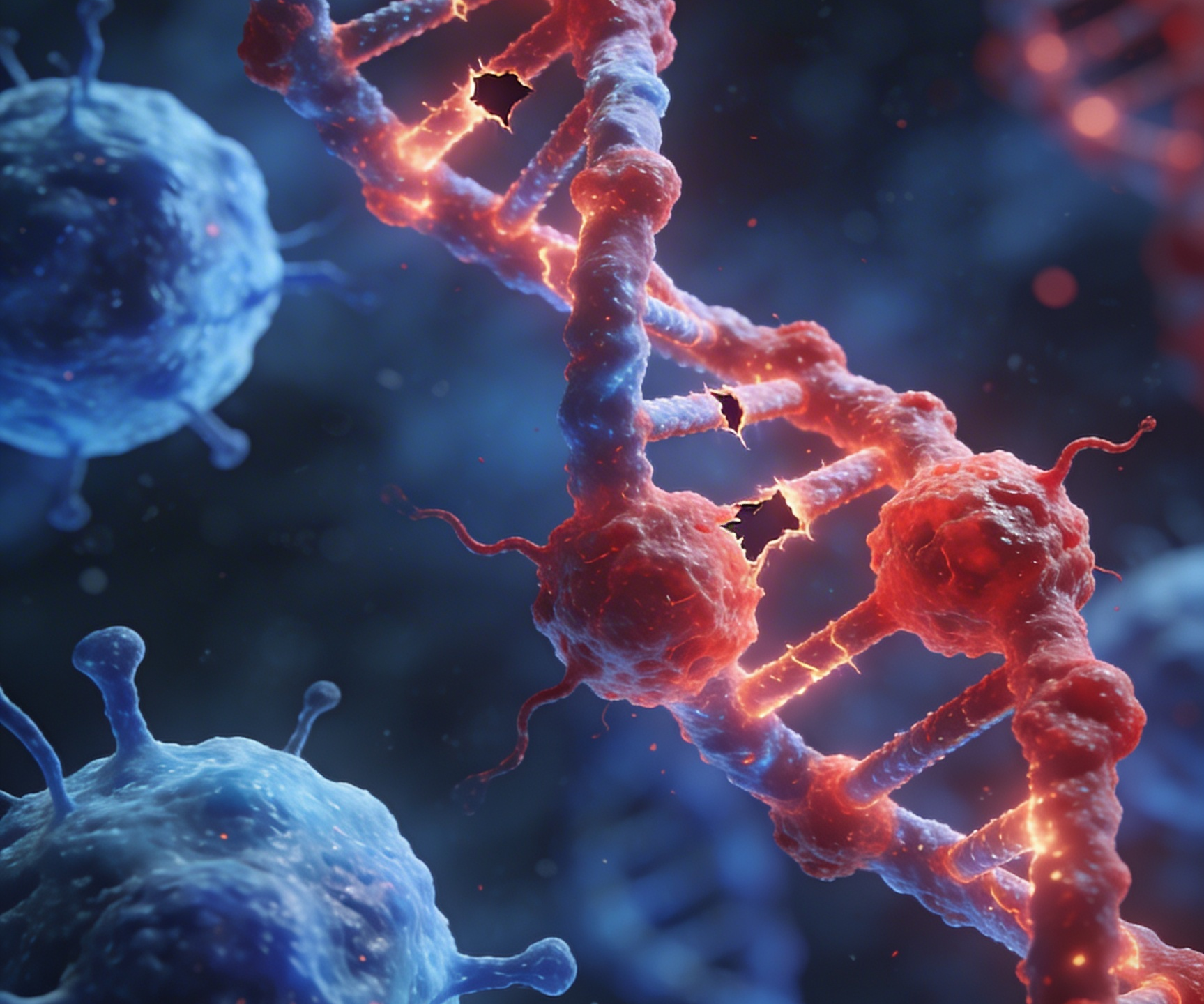
DNA is the molecule that carries the genetic instructions for how cells work. Genes are specific sections of DNA that help make proteins, and those proteins control many essential cell functions, including growth and division. NCI explains that genetic changes can alter how proteins function, and some of those changes can cause healthy cells to become cancerous.
This matters because cancer is not just a disease of one organ or one lump. At its core, cancer is driven by changes in the genetic instructions inside cells. Even though different cancers begin in different parts of the body, many of them share the same underlying pattern: DNA changes disrupt the normal controls that keep cell growth in balance.
DNA changes can happen in different ways. Some are linked to mistakes that occur when cells copy their DNA during normal cell division. Others may result from environmental exposures such as radiation, certain chemicals, or viruses. NCI explains that genetic changes that cause cancer can be inherited or arise from environmental exposures, and NHGRI notes that mutations can result from DNA copying mistakes, ionizing radiation, chemicals called mutagens, or viral infections.
Most cancers are caused by acquired gene changes that happen in a single cell during a person’s lifetime, rather than inherited gene changes passed down from a parent. The American Cancer Society notes that while some cancer-related gene changes are inherited, most cancers are caused by changes that start in a single cell over the course of life.
Not all DNA damage leads to cancer because the body has multiple protective systems. Cells can often repair damage, stop dividing, or die if the damage is too serious. Cancer usually develops only after a series of changes builds up in important genes. The American Cancer Society notes that it typically takes several gene changes before a cell becomes a cancer cell, and NHGRI explains that many mutations are normally found and fixed before they cause harm.
This is one reason cancer usually does not appear from a single mutation alone. In many cases, it is the accumulation of changes over time that disrupts the cell’s normal control systems enough for uncontrolled growth to begin.
Some of the most important gene groups in cancer are oncogenes, tumor suppressor genes, and DNA repair genes. The American Cancer Society explains that oncogenes can push cells to grow and divide, tumor suppressor genes normally help control cell growth or trigger cell death, and DNA repair genes help fix mistakes in DNA. When these systems are altered, the balance that keeps cells under control can be lost.
A simple way to think about it is this: some gene changes press the accelerator, some disable the brakes, and some damage the repair system. When enough of these problems happen together, abnormal cells may continue growing when they should not.
Yes, some DNA changes linked to cancer risk can be inherited, but most are not. NCI explains that genetic changes that cause cancer can be inherited from a parent or arise during a person’s life. Inherited changes can increase a person’s risk of certain cancers, but they do not guarantee that cancer will develop.
This distinction is important because people sometimes hear that cancer is a “genetic disease” and assume that it must always be hereditary. In reality, cancer is genetic in the sense that it involves gene changes, but most of those changes happen after birth in the body’s cells rather than being inherited.
The effectiveness of cancer treatment varies among each patient.
Understanding how DNA changes contribute to cancer is a major part of cancer research because it helps scientists identify what is driving a tumor and how it may behave. NCI notes that by characterizing DNA and other molecular features of cancer, researchers can identify key changes that may cause disease and support precision medicine approaches.
This is also why biomarker testing and cancer genomics have become so important. Learning which genetic changes are present in a tumor can sometimes help doctors understand the cancer more clearly and guide decisions about treatment, monitoring, or clinical trials.
Although DNA changes are central to cancer development, cancer care is complex. A mutation alone does not always tell the full story of how a cancer will behave or what the best next step should be. Cancer decisions are usually guided by a combination of pathology, imaging, stage, biomarkers, symptoms, and the patient’s overall health. NCI’s genetics resources emphasize that genetic findings are important, but they are only one part of the clinical picture.
That is why cancer-related decisions should always be guided by qualified medical professionals and evidence-based practice. Understanding DNA changes can help patients ask better questions, but those findings need to be interpreted in the right clinical context.
Cancer can develop when changes in DNA disrupt the systems that control how cells grow, divide, and repair themselves. Not every mutation leads to cancer, and many DNA changes are corrected before they cause harm. But when important protective systems are damaged and enough harmful changes accumulate, cells may begin to grow uncontrollably over time.
For patients and families, understanding this process can make cancer biology feel a little less mysterious. It also highlights why modern cancer care depends on careful testing, evidence-based interpretation, and guidance from experienced medical teams.
At Cancer A-Z, you can request a 15 mins free-of-charge discussion with our cancer professionals.
National Cancer Institute. The Genetics of Cancer.
https://www.cancer.gov/about-cancer/causes-prevention/genetics
National Cancer Institute. How Genetic Changes Lead to Cancer.
https://www.cancer.gov/about-cancer/causes-prevention/genetics/genetic-changes-infographic
National Cancer Institute. Cancer genome research and precision medicine.
https://www.cancer.gov/ccg/research/cancer-genomics-overview
National Human Genome Research Institute. Cancer Genomics.
https://www.genome.gov/dna-day/15-ways/cancer-genomics
National Human Genome Research Institute. Mutation.
https://www.genome.gov/genetics-glossary/Mutation
National Human Genome Research Institute. Cancer.
https://www.genome.gov/genetics-glossary/Cancer
American Cancer Society. How Does Cancer Start? Genes and Cancer.
https://www.cancer.org/cancer/understanding-cancer/genes-and-cancer.html
American Cancer Society. Genetic Mutations.
https://www.cancer.org/cancer/understanding-cancer/genes-and-cancer/gene-changes.html
American Cancer Society. Oncogenes, Tumor Suppressor Genes, and DNA Repair Genes.
https://www.cancer.org/cancer/understanding-cancer/genes-and-cancer/oncogenes-tumor-suppressor-genes.html
American Cancer Society. Genetics and Cancer Risk.
https://www.cancer.org/cancer/risk-prevention/genetics.html
Precision medicine provides patients with clearer and more personalized treatment guidelines


Learn how precision medicine can help with your cancer treatment

The effectiveness of cancer treatment varies among each patient.