
Want to learn how liquid biopsy may help you choose suitable natural substances during your cancer journey?

Small Intestine Cancer Often Starts Like This…

Small Intestine Cancer Often Starts Like This…

“It’s just stomach pain”… until it isn’t.

Small intestine cancer is relatively uncommon compared to other digestive cancers. Yet one of the biggest challenges is that it often develops quietly, with symptoms that feel too normal to raise concern at first.


Why It’s Often Missed

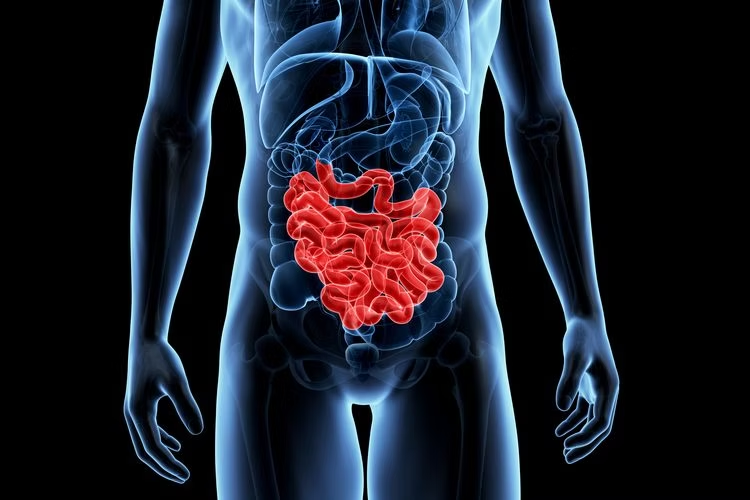
The small intestine is long and located deep within the digestive tract. Because of this, early tumors may not cause obvious symptoms, and when they do, they are often vague.

Common early symptoms may include:

  • Persistent bloating
  • Ongoing abdominal discomfort or cramping
  • Unexplained weight loss
  • Changes in appetite
  • Fatigue

These symptoms are non-specific and can overlap with many benign digestive conditions, which may delay evaluation.


What’s Happening in the Body

Small intestine cancer begins when cells in the intestinal lining develop abnormal changes and start to grow uncontrollably, forming a tumor.

Several factors have been associated with increased risk:

  • Chronic inflammation, such as in Crohn’s disease
  • Inherited syndromes like Lynch syndrome and Familial Adenomatous Polyposis
  • Increasing age (most cases occur after age 50)
  • Certain dietary and lifestyle patterns

These factors do not directly cause cancer on their own but may contribute to a higher likelihood over time.


When Should You Pay Closer Attention?

While occasional digestive discomfort is common, it may be worth seeking medical advice if symptoms:

  • Persist or worsen over time
  • Are unexplained
  • Do not improve with usual care

Early evaluation may help identify underlying causes and provide clarity.

How to predict whether the treatment will be effective before cancer treatment starts?

The effectiveness of cancer treatment varies among each patient.

Understanding Detection

There is no single test that captures the full complexity of cancer. Depending on individual circumstances, doctors may use:

  • Imaging (CT scans, MRI)
  • Endoscopy or capsule endoscopy
  • Laboratory or blood-based assessments

These tools aim to gather information to support clinical decisions.


A Balanced Perspective

Awareness is not about fear — it’s about understanding.

Small intestine cancer is rare, but because symptoms can be subtle, paying attention to persistent changes in your body may help you seek timely medical advice.

Sometimes, your body whispers before it shouts.


References

  1. American Cancer Society
    Signs and Symptoms of Small Intestine Cancer
    https://www.cancer.org/cancer/types/small-intestine-cancer/detection-diagnosis-staging/signs-symptoms.html
  2. National Cancer Institute
    Small Intestine Cancer Treatment (PDQ®)–Patient Version
    https://www.cancer.gov/types/small-intestine/patient/small-intestine-treatment-pdq
  3. Mayo Clinic
    Small intestine cancer – Symptoms and causes
    https://www.mayoclinic.org/diseases-conditions/small-intestine-cancer/symptoms-causes/syc-20355084
  4. Cleveland Clinic
    Small Intestine Cancer
    https://my.clevelandclinic.org/health/diseases/6192-small-intestine-cancer
  5. Aparicio T, et al. Small bowel adenocarcinoma: Epidemiology, risk factors, diagnosis and treatment. Digestive and Liver Disease. 2014.

Want to learn how liquid biopsy may help you choose suitable natural substances during your cancer journey?

Precision medicine provides patients with clearer and more personalized treatment guidelines

Enquire about liquid biopsy by sending us a message today

Name
Checkboxes

Message us on Whatsapp to know more about liquid biopsy

Learn how precision medicine can help with your cancer treatment

How to predict whether the treatment will be effective before cancer treatment starts?

The effectiveness of cancer treatment varies among each patient.