

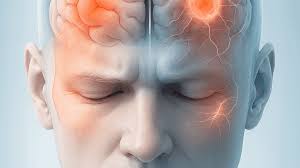
Headaches are one of the most common symptoms people experience. They can happen for many reasons—stress, lack of sleep, dehydration, or tension.
Because headaches involve the head, it’s natural to wonder whether they could be linked to something more serious, such as a brain tumor.
So the question is:
Does a headache mean you might have a brain tumor?
A headache on its own is usually not a sign of a brain tumor.
What matters more is the pattern, persistence, and whether other symptoms are present.
The connection between headaches and brain tumors is widely assumed, but it can be misleading.
While some people with brain tumors do experience headaches, headaches themselves are extremely common in the general population, whereas brain tumors are relatively rare.
This means that, in most cases, headaches are linked to everyday causes rather than serious disease.
Most headaches are not caused by underlying medical conditions. These are often referred to as primary headaches.
Typical causes include:
These types of headaches are far more likely and are generally manageable.
Although uncommon, headaches can sometimes be associated with more serious conditions, including brain tumors.
The key difference is that these headaches are rarely isolated.
It may be worth paying closer attention if headaches:
These signs do not automatically indicate a brain tumor, but they suggest that further evaluation may be helpful.
The brain itself does not feel pain. Headaches occur when there is pressure or irritation affecting surrounding structures.
In some cases, a tumor may:
This is why headaches related to tumors are often described as persistent and progressive, rather than occasional.
The effectiveness of cancer treatment varies among each patient.
From a medical standpoint, it is important to look at both likelihood and context.
Headaches are extremely common and affect a large portion of the population. Brain tumors, on the other hand, are relatively rare.
Among people who seek medical attention for headaches, only a very small proportion are found to have a brain tumor.
This is why healthcare professionals focus not just on the presence of a headache, but on how it behaves over time and whether other symptoms are present.
Most headaches do not require urgent concern. However, it may be reasonable to seek medical advice if you notice:
Seeking advice does not mean something serious is present—it simply helps clarify the situation.
A headache alone is not typically a sign of a brain tumor.
The more important factors are the overall pattern, progression, and whether other symptoms are present.
In most cases, headaches are linked to common and manageable causes. At the same time, staying aware of changes in your body—and seeking advice when something feels different—is a sensible approach.
Precision medicine provides patients with clearer and more personalized treatment guidelines


Learn how precision medicine can help with your cancer treatment

The effectiveness of cancer treatment varies among each patient.