支气管镜检查

What Is a Bronchoscopy?

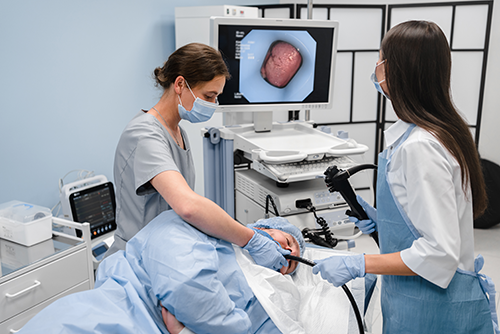
Bronchoscopy is a medical procedure that allows doctors to look inside the airways and lungs using a thin, flexible tube with a light and camera (called a bronchoscope).

It can be used to:

  • Detect lung abnormalities (such as tumors, inflammation, or blockages).
  • Take tissue samples (biopsies).
  • Guide treatment by removing blockages or delivering medications.


How Bronchoscopy Is Used in Cancer

  1. Detection & Diagnosis
  • Identifies abnormal growths or blockages in the trachea, bronchi, and lungs.
  • Collects tissue samples to confirm or rule out lung cancer.
  • Retrieves fluid samples (bronchoalveolar lavage) for analysis.
  1. Staging
  • Determines if lung cancer has spread to the central airways or nearby lymph nodes.
  1. Treatment
  • Removes airway obstructions caused by tumors.
  • Places stents to keep airways open.
  • Delivers targeted therapies directly into the lungs.
  1. Monitoring
  • Checks lung changes after treatment.
  • Evaluates recurrence or complications (e.g., infection).


Types of Bronchoscopy

  • Flexible Bronchoscopy
    • Most common, done under local anesthesia and sedation.
    • Used for diagnosis, biopsies, and fluid collection.
  • Rigid Bronchoscopy
    • Performed under general anesthesia.
    • Useful for removing large blockages, placing stents, or controlling bleeding.
  • Endobronchial Ultrasound (EBUS)
    • Combines bronchoscopy with ultrasound to examine deeper structures and lymph nodes.
    • Helps with lung cancer staging and guiding biopsies.


What to Expect During the Procedure

  • You may receive sedation or general anesthesia depending on the type.
  • The bronchoscope is inserted through the nose or mouth into the lungs.
  • The procedure usually takes 30–60 minutes.
  • Some patients experience mild sore throat, cough, or hoarseness afterward.


Benefits

  • Direct visualization of airways and lungs.
  • Allows biopsy and staging in the same procedure.
  • Can combine diagnosis and treatment (e.g., removing tumors, stents).
  • EBUS provides minimally invasive staging without surgical procedures.


Risks & Limitations

  • Mild bleeding, infection, or lung irritation.
  • Rare risk of lung collapse (pneumothorax) after biopsy.
  • Not all lung areas can be reached (may still require CT-guided biopsy or surgery).
  • Requires sedation or anesthesia, which may carry risks.


Alternatives & Related Tests

  • Chest CT Scan: Provides detailed imaging but no tissue sampling.
  • PET Scan: Shows metabolic activity of tumors.
  • Needle Biopsy (CT-guided): Reaches lung areas not accessible by bronchoscopy.
  • Surgical Biopsy: More invasive but sometimes necessary for diagnosis.


Questions to Ask Your Doctor

  • Why do I need a bronchoscopy?
  • Will it be flexible, rigid, or EBUS?
  • Will I be sedated or under general anesthesia?
  • What are the risks in my case?
  • How will the results affect my treatment plan?


Patient Tips

  • Do not eat or drink for at least 6–8 hours before the procedure.
  • Arrange for someone to drive you home after sedation.
  • Mild cough or sore throat is normal; contact your doctor if you have severe chest pain, shortness of breath, or heavy bleeding.
  • Avoid strenuous activity for 24 hours after the procedure.


References


了解精准检测

了解液体活检和化疗敏感性检测如何为您的护理方案提供个性化参考。

做出更明智的决策

获取相关知识,更积极地参与与医疗团队之间的护理讨论。

改善护理效果

了解精准医疗与代谢相关护理方式如何提升整体护理策略的参考价值。

今天就开始您的学习之旅

通过了解精准代谢肿瘤学相关知识,让自己更有力量,并在癌症护理过程中发挥更主动的参与作用。

需要更多信息?

我们的肿瘤相关专家团队可协助您理解诊断结果与护理方向选择。