
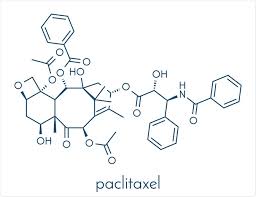
Paclitaxel is a widely used chemotherapeutic agent indicated in multiple malignancies, including breast, ovarian, lung, and pancreatic cancers. It exerts its anticancer effects by stabilising microtubules, thereby disrupting mitosis and inhibiting cancer cell proliferation.
Despite its clinical utility, paclitaxel is associated with pharmacological limitations, particularly related to its solubility, biodistribution, and toxicity profile. These challenges have driven ongoing research into more effective drug delivery strategies.
Paclitaxel is highly hydrophobic, resulting in poor aqueous solubility. Conventional formulations often require solvents such as Cremophor EL, which are associated with hypersensitivity reactions and other adverse effects (Weiss et al., 1990).
Additionally, non-specific distribution of paclitaxel may lead to:
These limitations highlight the importance of improving drug delivery systems to enhance therapeutic outcomes.
Recent research from Osaka Metropolitan University has introduced a novel drug delivery system utilising lipocalin-type prostaglandin D synthase (L-PGDS) as a carrier for paclitaxel (Furuta et al., 2026).
L-PGDS is an endogenous protein known for its ligand-binding capacity, making it a potential candidate for transporting hydrophobic compounds such as paclitaxel.
In breast cancer models, the study reported:
These findings suggest that improved delivery mechanisms may influence not only drug distribution but also treatment persistence.
The effectiveness of cancer treatment varies among each patient.
While the findings remain preclinical, they align with broader developments in oncology that emphasise precision drug delivery.
Advanced delivery systems may contribute to:
Such strategies are consistent with evolving paradigms in personalised oncology, where treatment effectiveness may depend not only on drug selection but also on delivery efficiency (Danhier et al., 2010).
It is important to note that the current evidence is derived from laboratory and animal studies. Translation into clinical practice requires:
Further research will be necessary to determine whether these promising preclinical outcomes can be replicated in patients.
The development of L-PGDS-based drug delivery represents a potential advancement in optimising paclitaxel therapy. By addressing key limitations such as solubility and tumour targeting, this approach may enhance the pharmacological performance of an established chemotherapeutic agent.
More broadly, this research highlights the growing importance of drug delivery innovation in cancer care, supporting a shift toward more precise and effective treatment strategies.
Danhier, F., Feron, O., & Préat, V. (2010). To exploit the tumor microenvironment: Passive and active tumor targeting of nanocarriers for anti-cancer drug delivery. Journal of Controlled Release, 148(2), 135–146. https://doi.org/10.1016/j.jconrel.2010.08.027
Furuta, K., et al. (2026). Drug delivery system for the anticancer drug paclitaxel using lipocalin-type prostaglandin D synthase conjugated to a tumor-targeting peptide. ACS Omega. Advance online publication.
Weiss, R. B., Donehower, R. C., Wiernik, P. H., Ohnuma, T., Gralla, R. J., Trump, D. L., Baker, J. R., Van Echo, D. A., Von Hoff, D. D., & Leyland-Jones, B. (1990). Hypersensitivity reactions from taxol. Journal of Clinical Oncology, 8(7), 1263–1268. https://doi.org/10.1200/JCO.1990.8.7.1263
Drug Target Review. (2026). New drug delivery system boosts paclitaxel cancer treatment. https://www.drugtargetreview.com/new-drug-delivery-system-boosts-paclitaxel-cancer-treatment/1867147.article
Medical Xpress. (2026). Novel cancer drug delivery system improves paclitaxel absorption. https://medicalxpress.com/news/2026-03-cancer-drug-delivery-paclitaxel-absorption.html
Precision medicine provides patients with clearer and more personalized treatment guidelines


Learn how precision medicine can help with your cancer treatment

The effectiveness of cancer treatment varies among each patient.