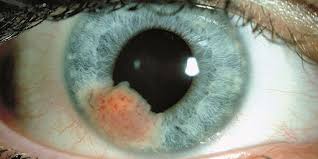
Many people don’t realize that cancer can develop in the eye. While it is relatively rare, eye cancer can affect different parts of the eye and surrounding tissues. Recognizing early signs and understanding available approaches may help support more informed decisions.
Types of Eye Cancer
Eye cancer is not a single condition — it includes several types depending on where it develops:
Intraocular melanoma – the most common type in adults, affecting structures inside the eye
Conjunctival tumors – growths on the eye surface (like the reference image)
Retinoblastoma – a rare type that mainly affects young children
Orbital cancers – cancers involving tissues around the eye
Possible Signs to Watch For
Symptoms can vary and are often subtle in early stages:
A visible lump or spot on the eye surface
Persistent redness or irritation
Changes in vision (blurred or partial loss)
A dark spot on the iris that changes over time
Sensation of something in the eye
These signs do not always indicate cancer, but persistent or unusual changes should be evaluated.
Why Early Attention Matters
Some eye cancers may grow slowly and remain localized, while others can progress or spread if not monitored. Early detection may help expand available options and support better management strategies.
How It Is Assessed
Evaluation may include:
Eye examination with specialized imaging
Ultrasound or optical scans
In some cases, additional laboratory or molecular analysis
These tools help provide more detailed insight into the nature of the condition.
How to predict whether the treatment will be effective before cancer treatment starts?
The effectiveness of cancer treatment varies among each patient.
Management depends on the type, size, and location of the tumor, as well as individual factors. Options may include monitoring, localized procedures, or systemic approaches.
Modern oncology is increasingly exploring more personalized strategies, which may provide additional biological insight to support decision-making.
Key Takeaway
Not every eye change is serious — but not every change should be ignored.
Paying attention to persistent or unusual symptoms, and seeking timely evaluation, may help you better understand your situation and available next steps.
References (Selected)
American Cancer Society. (2023). Eye Cancer (Ocular Melanoma) Overview.
National Cancer Institute. (2022). Intraocular (Uveal) Melanoma Treatment (PDQ®).
Shields, C. L., & Shields, J. A. (2017). Conjunctival tumors: Review of clinical features, risks, biomarkers, and outcomes. Survey of Ophthalmology, 62(6), 717–738.
Kaliki, S., & Shields, C. L. (2017). Uveal melanoma: relatively rare but deadly cancer. Eye, 31(2), 241–257.
National Eye Institute. (2023). Facts About Ocular Melanoma.
Want to learn how liquid biopsy may help you choose suitable natural substances during your cancer journey?
Precision medicine provides patients with clearer and more personalized treatment guidelines