
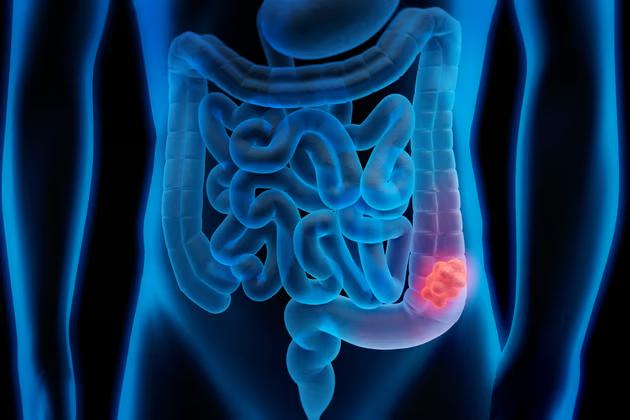
Colorectal cancer is cancer that starts in the colon or the rectum. These cancers are often grouped together because they share many features, even though they begin in slightly different parts of the large intestine. The CDC notes that colorectal cancer is a disease in which cells in the colon or rectum grow out of control.
In many cases, colorectal cancer begins with a polyp. Not all polyps become cancer, but some can change over time and eventually turn malignant if they are not removed. This gradual process is important because it creates a window in which screening can find and remove abnormal growths before cancer develops. Both NCI and CDC state that colorectal cancer often starts from precancerous polyps in the colon or rectum.
Like other cancers, colorectal cancer develops when cells begin growing in an abnormal and uncontrolled way. Over time, additional genetic and molecular changes can make these cells more aggressive, allowing them to invade nearby tissues or spread elsewhere in the body. NCI describes colorectal cancer as a disease in which malignant cells form in the tissues of the colon or rectum.
One of the biggest challenges with colorectal cancer is that early polyps and early-stage cancers do not always cause symptoms. A person can have polyps or even colorectal cancer and not know it. This is one reason screening is so important: it can find disease before symptoms begin, when treatment may be more effective. CDC specifically notes that polyps and colorectal cancer do not always cause symptoms, especially at first.
When symptoms do appear, they can include blood in the stool, a change in bowel habits, abdominal pain or cramping that does not go away, unexplained weight loss, weakness, or feeling very tired. These symptoms do not always mean cancer, but they should not be ignored if they persist. The American Cancer Society and CDC both list these as possible signs and symptoms of colorectal cancer.
Screening plays a major role because it can find precancerous polyps before they turn into cancer and can also detect colorectal cancer early, when treatment tends to work better. CDC states that screening tests can find precancerous polyps so they can be removed before they turn into cancer, and can also find colorectal cancer early. NCI also notes that some screening methods help prevent colorectal cancer in addition to detecting it.
The American Cancer Society recommends that people at average risk begin regular colorectal cancer screening at age 45. The CDC also advises adults aged 45 or older to talk with a doctor about screening. People at higher risk may need screening earlier or more often.
The effectiveness of cancer treatment varies among each patient.
Risk can be influenced by several factors, including older age, a personal or family history of colorectal polyps or cancer, certain inherited syndromes, inflammatory bowel disease, and lifestyle-related factors. NCI’s colorectal screening and prevention materials note that different factors can increase or decrease risk, and CDC emphasizes that screening is especially important because age is a major risk factor.
If colorectal cancer is suspected, doctors may recommend tests such as colonoscopy, stool-based testing, imaging, and biopsy. Screening tests and diagnostic tests are not the same: screening is used when a person has no symptoms, while diagnostic testing is used to investigate symptoms or abnormal findings. CDC and ACS both explain this distinction in their colorectal cancer guidance.
Colorectal cancer often develops slowly, and that makes awareness especially important. Because early changes may not cause symptoms, screening can be one of the most effective ways to catch problems early or prevent cancer from developing at all. Understanding how colorectal cancer forms can help patients and families take symptoms seriously, know when to ask about screening, and seek attention earlier when something feels wrong.
At Cancer A-Z, you can request a 15 mins free-of-charge discussion with our cancer professionals.
National Cancer Institute. Colorectal Cancer—Patient Version.
https://www.cancer.gov/types/colorectal
National Cancer Institute. Colorectal Cancer Screening (PDQ®)–Patient Version.
https://www.cancer.gov/types/colorectal/patient/colorectal-screening-pdq
National Cancer Institute. Screening Tests to Detect Colorectal Cancer and Polyps.
https://www.cancer.gov/types/colorectal/screening-fact-sheet
Centers for Disease Control and Prevention. Colorectal Cancer Basics.
https://www.cdc.gov/colorectal-cancer/about/index.html
Centers for Disease Control and Prevention. Screening for Colorectal Cancer.
https://www.cdc.gov/colorectal-cancer/screening/index.html
Centers for Disease Control and Prevention. Symptoms of Colorectal Cancer.
https://www.cdc.gov/colorectal-cancer/symptoms/index.html
American Cancer Society. Colorectal Cancer Signs and Symptoms.
https://www.cancer.org/cancer/types/colon-rectal-cancer/detection-diagnosis-staging/signs-and-symptoms.html
American Cancer Society. American Cancer Society Guideline for Colorectal Cancer Screening.
https://www.cancer.org/cancer/types/colon-rectal-cancer/detection-diagnosis-staging/acs-recommendations.html
American Cancer Society. Colorectal Cancer Early Detection, Diagnosis, and Staging.
https://www.cancer.org/cancer/types/colon-rectal-cancer/detection-diagnosis-staging.html
Precision medicine provides patients with clearer and more personalized treatment guidelines


Learn how precision medicine can help with your cancer treatment

The effectiveness of cancer treatment varies among each patient.